Revolutionizing Communication: The Rise of SMS-Based AI Agents
In today’s fast-paced digital world, the demand for instant and efficient communication has never been higher. While smartphone apps and chatbots on websites have gained popularity, a silent revolution is taking place quietly through one of the oldest forms of digital communication: SMS. SMS-based AI agents are emerging as powerful tools that combine the simplicity of text messaging with the smart capabilities of artificial intelligence — unlocking new possibilities across industries and improving accessibility worldwide.
What Are SMS-Based AI Agents?
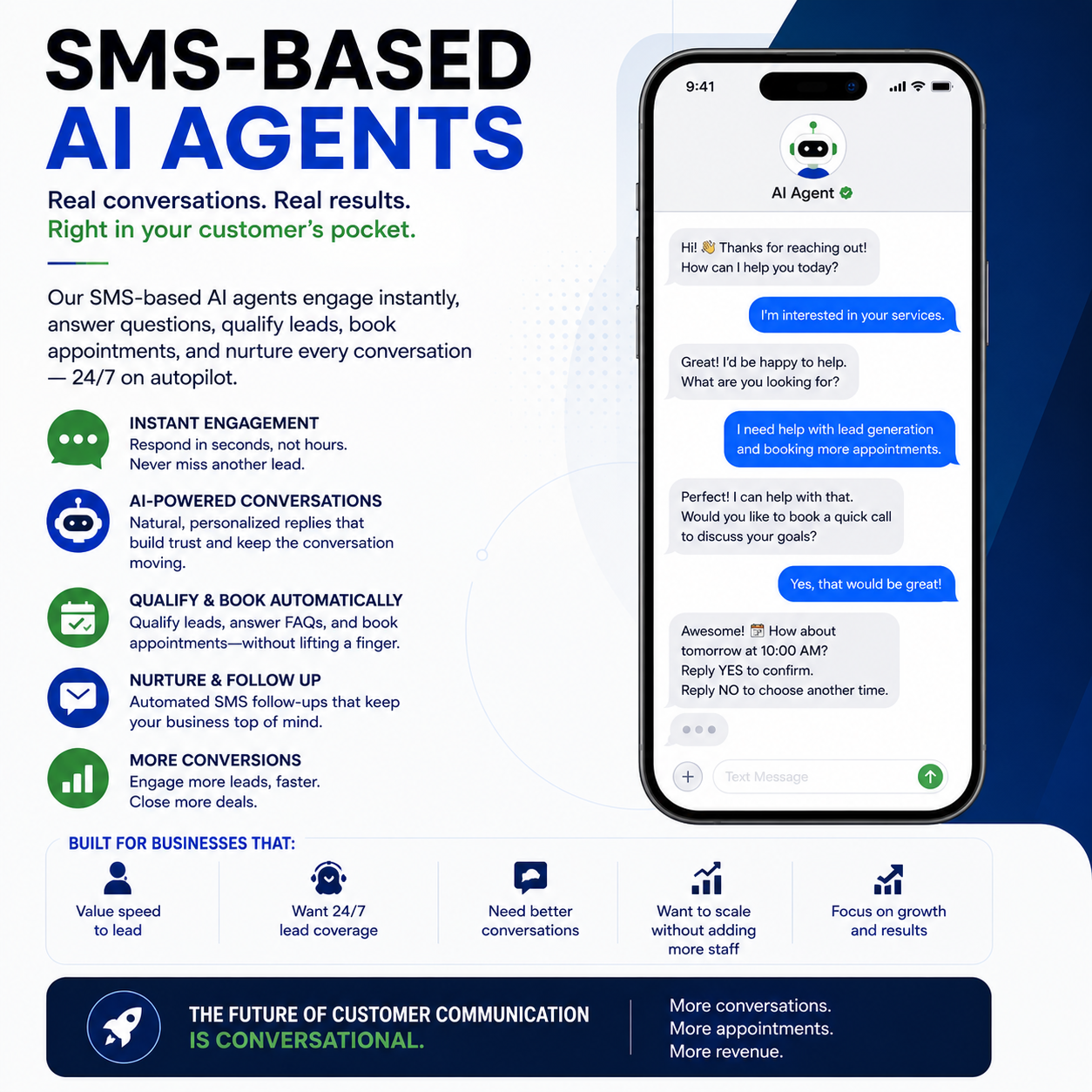
SMS-based AI agents are intelligent automated systems that interact with users via text messages. Unlike app-based chatbots confined to specific platforms, these AI agents use the standard SMS protocol, allowing them to reach any mobile phone, regardless of the device or internet connectivity. Users simply send a text, and the AI processes the input, responds intelligently, and even executes certain commands.
Key Advantages of SMS-Based AI Agents
- Ubiquity: Nearly every mobile phone supports SMS, making AI interactions accessible without needing a smartphone or data plan.
- Low Barrier to Entry: No app installation or internet connection required; users just need basic texting capabilities.
- Cost-Effectiveness: SMS messaging is often cheaper and more reliable in areas with limited internet infrastructure.
- Immediate and Direct Communication: Text messages have high open rates and get immediate attention compared to emails.
How Do SMS-Based AI Agents Work?
At the core, these agents integrate natural language processing (NLP) algorithms with SMS gateway platforms. When a user sends a query via SMS, the gateway relays the message to the AI backend. The AI analyzes the text to understand the intent and context, generating an appropriate response that’s sent back as a text message. Over time, machine learning enables these agents to improve their accuracy and offer personalized interactions.
Use Cases and Applications
1. Customer Support
Businesses can provide 24/7 customer service via SMS-AI agents, answering FAQs, handling complaints, and providing order updates. This reduces human workload and ensures customers get timely help.
2. Healthcare
Patients can receive appointment reminders, medication alerts, symptom checks, and mental health support through SMS-based AI systems, making healthcare more accessible, especially in underserved regions.
3. Banking and Finance
AI agents assist users with balance inquiries, transaction histories, fraud alerts, and bill payments, all through simple text commands — offering convenience and security without needing a smartphone app.
4. Education
Learners in remote areas can access study materials, quizzes, and tutor assistance via SMS AI, breaking internet barriers and enabling continuous education.
5. Agriculture
Farmers receive weather forecasts, market prices, and farming tips through SMS AI agents, helping them make informed decisions and increase productivity.
Challenges to Consider
While promising, SMS-based AI agents face some hurdles:
- Limited Message Length: SMS restricts responses to 160 characters, requiring concise communication.
- Privacy and Security: Sensitive information transmitted over SMS needs robust encryption and data protection methods.
- Language and Localization: Supporting multiple languages and dialects is crucial for broad usability.
- Integration Complexity: Seamlessly connecting these agents to backend databases and CRMs can be complex.
The Future of SMS-Based AI Agents
The convergence of AI, natural language understanding, and telecom technologies promises an exciting future where SMS-based AI agents become even smarter, faster, and more intuitive. With advances in AI models and 5G network enhancements, these agents will not only handle routine queries but also proactively anticipate user needs, deliver personalized recommendations, and interact via multimedia SMS (MMS) capabilities.
As digital inclusion becomes a global priority, SMS-based AI agents provide a compelling way to bridge the gap — giving millions, especially in emerging markets, access to intelligent services through a device they already own and know how to use.
Conclusion
SMS-based AI agents represent a powerful fusion of simplicity and sophistication. By leveraging the universal reach of SMS and the smart capabilities of AI, these agents open new frontiers in communication, customer engagement, and service delivery. Whether assisting a farmer in rural India, a patient managing medications, or a customer tracking a package, SMS-based AI agents are poised to become an indispensable part of our connected lives.
Embracing this technology means embracing accessibility, efficiency, and inclusivity — driving us toward a smarter and more connected world, one text message at a time.