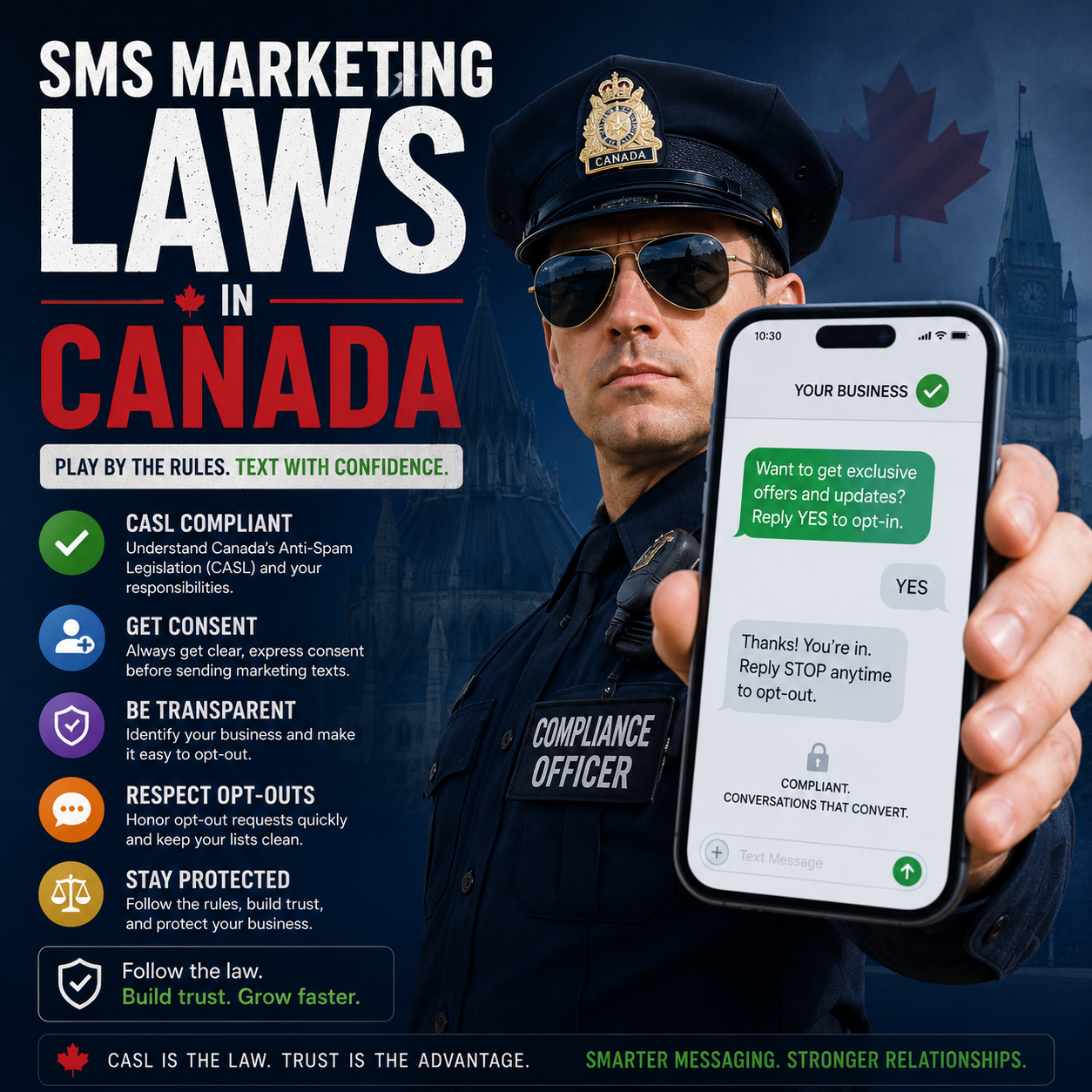
Navigating SMS Marketing Laws in Canada: What Every Business Needs to Know
In today's fast-paced digital world, SMS Marketing Canada is becoming an increasingly popular channel for businesses to connect directly with their customers. However, navigating the legal landscape of SMS marketing in Canada requires a clear understanding of the national laws and regulations to ensure compliance and maintain customer trust. This article will guide you through the essentials of SMS marketing laws in Canada, helping your business to run effective campaigns without legal pitfalls.
Understanding Canada's Anti-Spam Legislation (CASL)
The cornerstone of SMS marketing compliance in Canada is the Canadian Anti-Spam Legislation (CASL), which came into effect on July 1, 2014. CASL regulates the sending of commercial electronic messages (CEMs), including SMS texts, to protect consumers from spam and deceptive marketing practices.
Key provisions of CASL that SMS marketers must know include:
- Consent Requirement: Businesses must have expressed or implied consent before sending marketing SMS messages.
- Identification Information: All messages must clearly identify the sender and include contact information.
- Unsubscribe Mechanism: SMS messages must provide a clear and simple way for recipients to opt out of receiving future messages.
Express vs. Implied Consent
Express consent is obtained when a customer explicitly agrees to receive text messages, usually through sign-ups, checkboxes on websites, or written permissions.
Implied consent may exist in existing business relationships, such as when a customer has made a recent purchase or inquiry, but this consent is limited in duration and scope.
Obtaining express consent is strongly recommended, as it provides the clearest legal protection for your SMS marketing campaigns.
Additional Legal Requirements for SMS Marketing Canada
Beyond CASL, Canadian businesses must also consider the Personal Information Protection and Electronic Documents Act (PIPEDA), which governs the collection, use, and disclosure of personal information.
- Data Privacy: Ensure you collect and store phone numbers and other information securely, and only use them for stated marketing purposes.
- Message Content Restrictions: Avoid fraudulent, misleading, or harmful content in your SMS marketing messages.
- Time Restrictions: Send SMS messages during reasonable hours to avoid disturbing recipients.
Best Practices for SMS Marketing Compliance
To stay fully compliant with SMS marketing laws in Canada and build trust with your audience, consider following these best practices:
- Obtain Clear Permissions: Use straightforward opt-in forms, double opt-in verifications, and maintain detailed records of consent.
- Provide Identification and Opt-Out Options: Always identify your business clearly and include easy opt-out instructions, such as texting “STOP” to unsubscribe.
- Limit Frequency: Avoid overwhelming subscribers with too many messages to reduce opt-outs and complaints.
- Keep Messages Relevant and Valuable: Personalize your SMS content based on your audience to maintain engagement and minimize unsubscribes.
- Secure Data Handling: Use encrypted systems and follow best practices for data security under PIPEDA guidelines.
Penalties for Non-Compliance
Failure to comply with CASL and related laws can result in significant fines and damage to your brand reputation. Enforcement agencies in Canada have levied penalties of up to $10 million per violation for businesses that send unsolicited commercial messages without consent.
Proactively managing compliance not only helps avoid fines but also positions your business as trustworthy and respectful of customer privacy.
How Businesses Can Leverage SMS Marketing Canada Safely
SMS marketing offers one of the highest engagement rates compared to other digital marketing channels. With proper compliance, your business can unlock many benefits:
- Direct Customer Engagement: Reach customers instantly with timely offers, reminders, and updates.
- Enhanced Customer Loyalty: Personalized SMS campaigns foster loyalty and repeat business.
- Cost-Effective Communication: SMS campaigns often deliver better ROI than traditional methods.
Ensure your SMS marketing campaigns respect all legal guidelines to fully capture these advantages without risk.
Conclusion
In summary, SMS Marketing Canada is a powerful tool for business growth but requires strict adherence to Canadian laws, primarily CASL and PIPEDA. Businesses must obtain proper consent, provide clear identification and opt-out options, and protect customer data to run compliant and effective SMS campaigns.
By understanding and implementing SMS marketing legal requirements, your Canadian business can confidently leverage the benefits of texting customers while safeguarding your reputation. Always stay updated on evolving laws and best practices to keep your marketing strategy compliant and successful.

